

There aren’t many things more annoying than turning the shower knob only to get a trickle of water. Or watching your shower suddenly become weak as someone else in the house turns on a faucet.Low or inconsistent water pressure can detract from your shower experience, cause you to wait longer for your appliances to fill and make everyday tasks more cumbersome.
It can also indicate a larger problem in your plumbing system. Several issues can lead to low water pressure in your home. Some can be corrected with easy DIY solutions. While others might mean it’s time to call your local plumber for an inspection.
Here are seven common reasons your home’s water pressure may keep dropping.
1. A Clogged Faucet or Showerhead
If one faucet or shower has low water pressure, the cause is likely at that fixture. Faucet aerators and showerheads can become clogged over time with minerals and sediment.
You may notice:
- Weak flow from one faucet
- Uneven spray from a showerhead
- Water spraying in unusual directions
- Other fixtures throughout the house working normally
Cleaning the aerator or showerhead can often return water pressure to normal.
If more than one faucet or shower is affected by low pressure, the issue is likely found elsewhere.
2. Your Main Shutoff Valve Isn’t Fully Open
Your main shut off valve controls how much water enters your home’s plumbing.
If the valve was recently operated during a plumbing repair and not fully reopened, then your home’s water supply may be restricted.
Troubles caused by a partially closed main valve include:
- Low pressure throughout the home
- Reduced flow when multiple fixtures operate
- A noticeable change after recent plumbing work
Homeowners should take care when operating older valves. The older pipes are, the more likely they are to leak or break when manipulated.
Play it safe and have a plumber take a look if you’re not sure your shut off valve is functioning properly.
3. Your Pressure Regulator May Be Failing
If your home is equipped with a pressure-reducing valve, also known as a water pressure regulator, this may be the culprit.
Typically when a regulator is going out you can have too much pressure, too little pressure, or pressure that fluctuates.
Signs that your regulator may need to be replaced include:
- Pressure suddenly becoming weaker
- Water pressure fluctuating throughout the day
- Pressure dropping when multiple fixtures are used
- Unusually high water pressure
- Plumbing noises or banging
A plumber can test test how much water pressure is coming into your home and see if your regulator is functioning properly. Simply replacing a bad regulator can often remedy these issues.
4. You May Have a Hidden Plumbing Leak
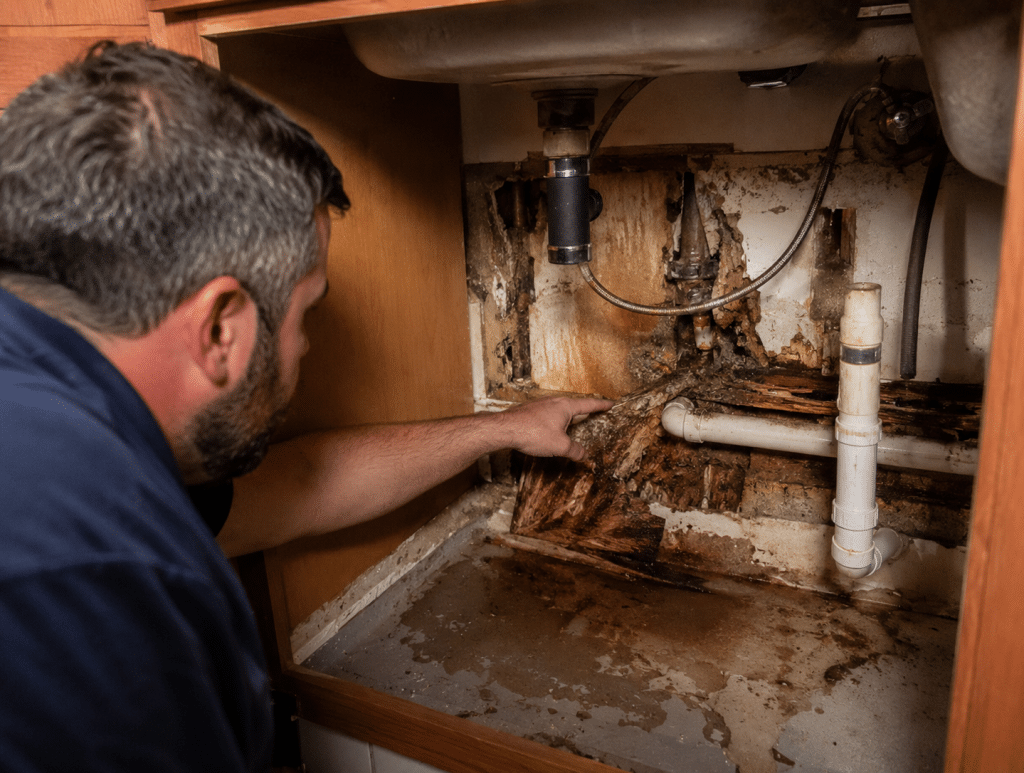
Hidden plumbing leaks can reduce water pressure while causing moisture damage behind walls, cabinets, and fixtures.
If there is a leak along your plumbing system, less water will make it to your faucets.
Small hidden leaks may not show signs of obvious water damage because they are often located inside walls, under floors, or underground.
Signs you might have a hidden leak include:
- Unexpectedly high water bills
- Damp spots on walls or ceilings
- Musty odors
- Water stains
- The sound of running water when fixtures are off
- Low water pressure
- Areas of unusually green or wet landscaping
One simple check is to turn off all water-using fixtures and appliances and look at your water meter. If it moves, you may have a leak.
Due to the potential water damage and damage to the structure of your home that hidden leaks can cause, they should be checked out right away.
5. Old or Corroded Pipes Are Restricting Water Flow

Aging or corroded pipes can develop internal buildup that restricts water flow and reduces water pressure throughout a home.
Older pipes can slowly become clogged with corrosion, mineral deposits, or other types of buildup from the inside out.
When there is less open space in the pipe, less water will flow through it.
- Gradually worsening water pressure
- Weak flow throughout the house
- Discolored water
- Reduced pressure when several fixtures are running
- Differences in pressure between parts of the home
While a faucet aerator can become blocked over time and affect water pressure, buildup inside the home’s plumbing won’t be fixed by simply cleaning a fixture.
Professional plumbers can inspect the pipes to see if any sections need replacement.
6. Too Many Fixtures Are Using Water at Once
Occasionally, there may not actually be anything mechanically wrong with your plumbing.
The water flow available to your home may just be shared by several fixtures and appliances at the same time.
You may notice a drop in shower pressure when:
- Starts the washing machine
- Runs the dishwasher
- Turns on another shower
- Uses an outdoor hose
- Fills a bathtub
It’s normal to experience some reduction in pressure when your home’s water is being heavily utilized.
If turning on one more faucet results in a significant pressure drop, you may have an issue with your home’s water supply, pipe size, pressure regulator, or another part of your plumbing system.
7. There May Be a Problem With the Main Water Supply
If you experience low water pressure throughout your whole home, the cause could actually be coming from outside your home.
Sometimes water utility maintenance, construction work, a broken water main, or some other temporary water supply problem can cause low water pressure for everyone in the neighborhood.
Check with your neighbors. If they aren’t having water pressure issues, then the issue is likely in your home somewhere between your home’s water service connection and your plumbing fixtures.
If the entire neighborhood is affected by low water pressure, a plumber can help you determine the cause of the loss in pressure from your water supplier.
Why Does My Water Pressure Drop When I Turn On Another Faucet?
This symptom can help you troubleshoot your issue. Some loss in pressure is natural if more than one plumbing fixture is using your home’s water supply simultaneously.
However, if pressure loss is drastic when you turn on more than one faucet, it could be the result of:
- A partially closed valve
- A failing pressure regulator
- Restricted pipes
- An undersized supply line
- A plumbing leak
- Insufficient incoming water pressure
If your shower weakens anytime another faucet is turned on in your house, such as the washing machine filling with water, it might be time to call a pro.
Why Is My Water Pressure Suddenly Low?
If your plumbing was working fine yesterday but has suddenly lost pressure today, it’s time to find out why.
The problem could be caused by:
- A water leak
- A malfunctioning pressure regulator
- A partially closed valve
- Plumbing repairs in the area
- A damaged water service line
- A problem with the municipal water supply
Not sure where to start? Think about if the loss of water pressure is affecting your whole house or just one faucet. If it’s the latter, begin your investigation at the affected fixture. If your entire home’s water pressure is low, the
culprit is most likely further up the line.
What Is Considered Good Water Pressure for a Home?
Residential plumbing systems work best when they are supplied with moderate pressure.
Too little pressure and fixtures can be annoying to use. Too much pressure can cause undue stress on plumbing fixtures, appliance hookups, valves and other fixtures.
A plumber can gauge the pressure entering your home and help you determine if the pressure is right for your home.
Increasing pressure isn’t always the solution. You want even, correct pressure throughout your home.
Can Hard Water Affect Water Pressure?
Hard water can lead to mineral buildup which can cause decreased water flow over time.
The dissolved minerals in hard water can build up inside of fixtures, aerators, showerheads, valves and some plumbing fixtures.
You’ll see whitish minerals deposits around faucets and showerheads and experience gradually reduced flow.
Cleaning fixtures will help in some cases, but if you have substantial buildup in your plumbing you may need to take additional steps.
If hard water is a chronic issue for you, it may be worth discussing water treatment or a water-softening system with your plumber.
When Should You Call a Plumber for Low Water Pressure?
You should consider professional plumbing service when:
- Water pressure decreases suddenly
- Multiple fixtures have poor pressure
- Pressure continues getting worse
- You suspect a hidden leak
- Your water bill unexpectedly increases
- Pipes or fixtures are making unusual noises
- Water pressure is inconsistent
- One area of your home has drastically worse pressure than another
- You’ve looked into common fixture problems but haven’t found the issue
Professional plumbers have ways of testing your system to determine if your problem is with the fixtures, regulator, valves, water service, or plumbing lines.
Don’t Ignore a Sudden Change in Water Pressure
Low water pressure is often written off as annoying inconvenience. However, low pressure can also be symptomatic of a bigger plumbing issue.
Identifying the issue sooner rather than later can prevent water damage, wasted water, or larger repairs down the road.
Instead of speculating which parts may be affected, a plumbing inspection will reveal exactly where pressure is being lost.
Low Water Pressure Plumbing Service in South Jordan, Utah
If your water pressure keeps dropping, Webfoot Plumbing can help identify the source of the problem and recommend the appropriate repair.
If you find that your water pressure continues to drop, Webfoot Plumbing can diagnose the cause and suggest the necessary repair. From damaged pressure regulators to plumbing leaks, restricted pipes, faulty valves, or any other cause of low water pressure, getting your plumbing system checked out can increase your home’s water flow reliability.
Contact Webfoot Plumbing at (801) 446-0520 if you need help with low water pressure in South Jordan, Utah. We’ll send a plumber to your home to inspect your pipes and help get your water pressure flowing how it should again. You can also contact on online here.