

Maybe you’re tired of squeezing past an oversized vanity. Maybe your shower never quite feels clean anymore. Or maybe you’re finally ready to replace the bathroom that looked dated when you bought the house.
Whatever started the idea, a bathroom remodel is a chance to make your daily routine a little easier. Choosing tile, cabinets, and fixtures is usually the fun part. But before you order that freestanding tub, it helps to know what’s happening behind the walls and beneath the floor.
A little plumbing planning now can help you avoid expensive changes once the work begins. Here are a few things to think through before remodeling your Utah bathroom.
Start With What Isn’t Working
Before choosing finishes, think about how your bathroom works on an ordinary morning.
Does the sink drain slowly? Does the shower temperature change when someone uses another fixture? Are you constantly cleaning up water around the base of the faucet?
Write those frustrations down and share them with your plumber. A remodel is a good opportunity to investigate existing problems while the space is already being taken apart. You don’t want to finish a beautiful bathroom and realize you still have the same slow drain.
It also helps to separate the things you need from the things you would simply enjoy. Fixing a recurring leak may take priority over adding a second showerhead.
Moving Fixtures Can Change the Budget
Moving the toilet across the room might make the layout feel more open, but it can also mean moving its drain and water supply. Depending on the home, that could involve opening the floor, accessing the ceiling below, or cutting into concrete.
The same goes for relocating a shower, bathtub, or sink. Your plumber needs to consider the water lines, drainage, and venting that serve each fixture.
Keeping fixtures near their current locations can often help control costs. Still, sometimes a different layout is worth the extra work—especially if it solves a problem you deal with every day.
Have your preferred layout reviewed before you commit to cabinets or fixtures. You’ll have a clearer picture of what’s practical and where your money will go.
Give Existing Plumbing a Closer Look
New tile doesn’t tell you much about the condition of the pipes underneath it.
Once walls or floors are open, your plumber can check accessible plumbing for signs of leaks, corrosion, aging connections, and previous repairs that may need attention. Worn shutoff valves are worth discussing, too. Being able to shut off water to a sink or toilet makes future maintenance much easier.
You don’t necessarily need to replace every pipe because you’re remodeling. The goal is to understand what’s there and make informed decisions while access is available.
Ask your plumber which repairs are necessary, which upgrades make sense now, and which items can reasonably stay.
Choose Fixtures Before the Plumbing Is Finalized

Two faucets that look similar online may need different installation setups. A wall-mounted faucet needs plumbing inside the wall. A freestanding tub may require a floor-mounted filler. A new vanity may have drawers that interfere with the existing drain location.
Choose your major fixtures early and share the product specifications with your plumber before the rough-in work begins.
Pay particular attention to:
- The vanity’s dimensions and drawer layout
- Faucet mounting style and required connections
- Bathtub drain location
- Shower valve and trim compatibility
- Toilet dimensions and rough-in requirements
Getting these details settled early helps prevent last-minute changes when everything is ready to install.
Think Beyond the Look of Your New Shower
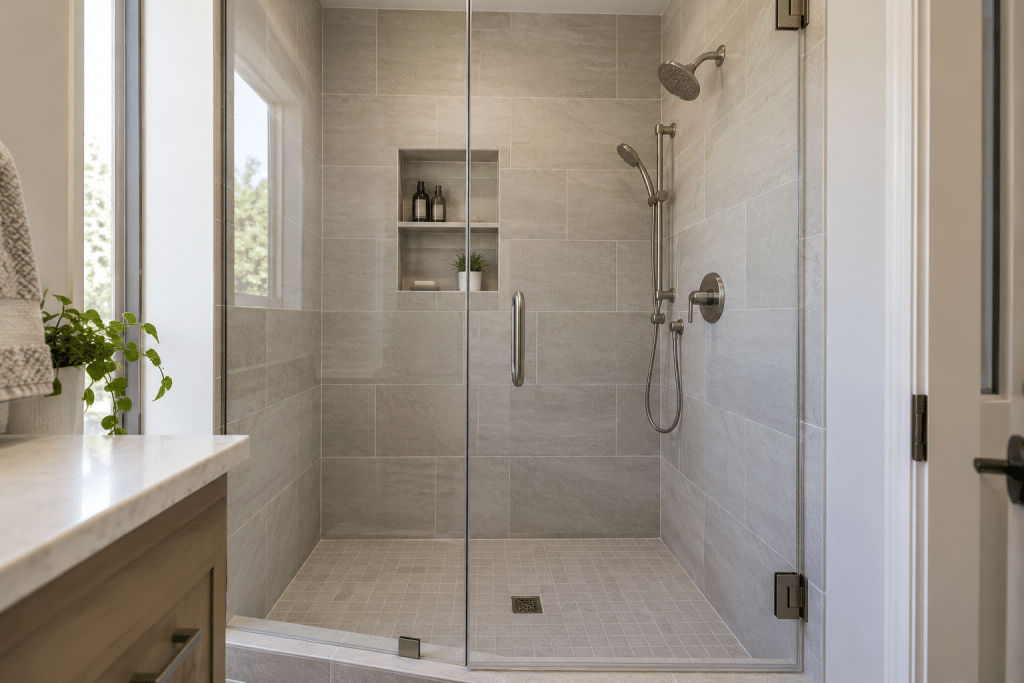
A larger shower can be a great upgrade, but consider how you want it to work.
If you’re adding multiple showerheads or body sprays, have your plumber evaluate the water supply and hot-water demand. A large soaking tub also needs more hot water than a smaller bath.
For a tub-to-shower conversion, the existing drain should be evaluated rather than assumed suitable. Drainage, waterproofing, and the shower base all need to work together.
This is also a good time to think about future comfort. A handheld showerhead or easier-to-reach controls may be useful long after the remodel is finished.
Check Permit Requirements Before Work Starts
Permit requirements depend on where you live and what the project includes. Moving plumbing or adding fixtures can involve different requirements than replacing an existing fixture with an equivalent one.
Before demolition begins, confirm what your local building department requires and who will arrange any permits and inspections. Include those steps in the project schedule so the work can be checked at the appropriate stage.
Leave Room for the Unexpected
Even a carefully planned remodel can uncover something you couldn’t see beforehand. An old leak, damaged subfloor, or awkward pipe location may only become apparent after demolition.
Leave some flexibility in your budget and talk through how unexpected work will be handled. Ask for an explanation of the problem, the recommended repair, and the cost before additional work moves forward.
Also, find out how long the bathroom will be out of service. If it’s your only bathroom, that conversation belongs near the beginning of the project.
Plan Your Bathroom Plumbing With Webfoot
Your new bathroom should feel good to use every day, from the first shower in the morning to brushing your teeth at night.
At Webfoot Plumbing, we’re here to help you think through the plumbing side of your Utah bathroom remodel. Whether you’re replacing fixtures or considering a different layout, starting the conversation early gives you time to understand your options.
Contact Webfoot Plumbing at (801) 446-0520 to discuss your bathroom remodeling plans and take the next step toward a space that works better for your home.