

Hard water affects many homeowners across Utah, including those in South Jordan. Hard water isn’t harmful to use, but the minerals it leaves behind can build up in your home over time.
Minerals like calcium and magnesium can create buildup in faucets, showerheads, water heaters, appliances, and your plumbing lines. This buildup can cause decreased water pressure, a shorter lifespan for fixtures, and inefficient plumbing down the road.
If you’re in South Jordan, you can prevent these problems by knowing the early signs of hard water. Catching the issue early can save you from costly plumbing repairs in the future.
How Does Hard Water Form?
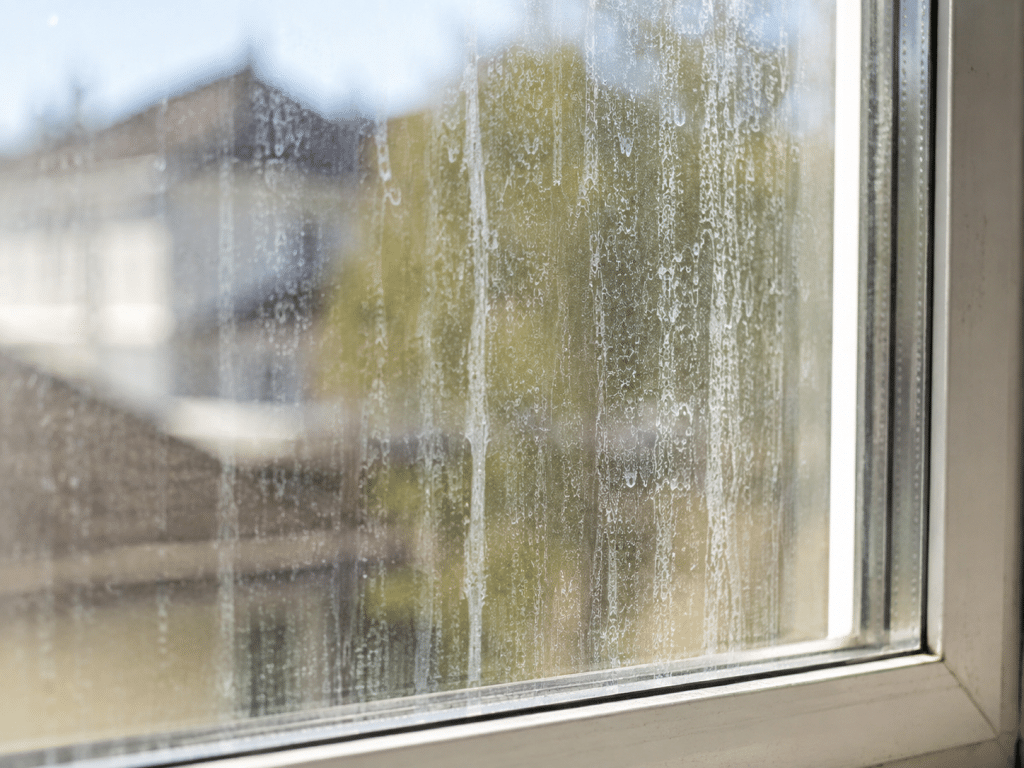
Hard water stains South Jordan
Hard water has high levels of naturally occurring minerals, most commonly calcium and magnesium.
Water passing through soil and rock can acquire those minerals before it enters your home. Those minerals stay dissolved in the water until they start building up on your pipes.
You might not notice hard water right away. Signs of hard water may slowly develop in your home over the course of months or years as minerals accumulate.
Hard water can impact:
- Faucets
- Showerheads
- Water heaters
- Dishwashers
- Washing machines
- Plumbing valves
- Pipes
- Toilets
- Sinks and tubs
Symptoms become more evident the more mineral buildup occurs.
1. White or Chalky Buildup Around Faucets
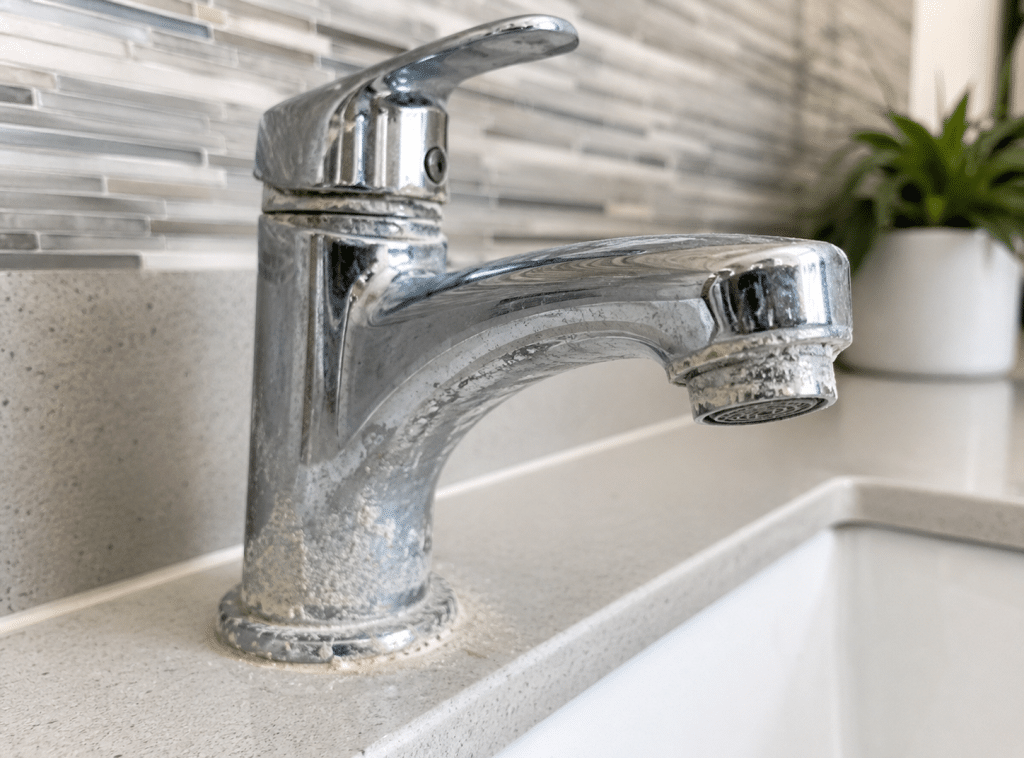
Hard Water Buildup on Faucet in South Jordan
The easiest evidence of hard water to spot is white crusty buildup around faucets and fixtures.
You may notice this buildup on:
- Faucet aerators
- Handles
- Showerheads
- Sink drains
- Bathtub fixtures
This crusty white buildup happens when water evaporates and leaves behind dissolved minerals.
It may start out just looking gross. Eventually, though, minerals can build up in tiny holes and decrease water flow.
If you constantly find yourself cleaning white residue off your faucets just to have it return in days, hard water might be the issue.
2. Your Showerhead Has Weak or Uneven Spray
Tiny holes inside your showerhead can get clogged by mineral buildup over time.
You might experience:
- Weak water flow
- Uneven spray patterns
- Water spraying sideways
- Certain showerhead openings no longer working
- Pressure that seems lower than it used to be
Cleaning or soaking the showerhead can sometimes restore water flow, but a recurring buildup problem usually means you have a larger hard-water issue.
If you notice hard-water buildup around multiple areas of your home, you may want to invest in a whole-home water treatment system.
3. Water Pressure Is Gradually Getting Worse
Minerals from hard water can cause restricted water flow by building up inside fixtures.
Unlike the sudden loss of water pressure due to a leak or broken valve, mineral buildup is usually gradual.
You may notice that:
- Faucets do not flow as strongly as they used to
- The shower feels weaker
- Several fixtures have reduced pressure
- Appliances take longer to fill
Deposit can build up inside of valves, fittings, aerators, and (rarely) plumbing lines.
If water pressure is slowly getting worse in your home, a plumber can diagnose if the issue is from minerals, corrosion, a pressure regulator, or something else.
4. Your Water Heater May be Working Harder
Hard water is especially hard on water heaters.
When water heats up, minerals that were once dissolved in it can precipitate out and settle to the bottom of the tank or on heating elements.
A buildup of sediment can cause your water heater to struggle to heat your water. Signs your water heater may be affected by hard water buildup include:
- Rumbling or popping noises
- Less available hot water
- Longer heating times
- Higher energy use
- Sediment during water heater flushing
Sediment can also decrease the efficiency and lifespan of water heater parts. Routine maintenance can extend your water heater’s lifespan, but water treatment can help homes with chronic hard water issues.
5. Faucets & Fixtures Wear Out Faster
Hard water spots aren’t just annoying on your fixtures — mineral buildup can affect moving parts, too.
Repeated exposure to hard water may cause problems with:
- Faucet cartridges
- Valves
- Aerators
- Shower diverters
- Toilet fill valves
- Appliance water valves
You might notice you’re replacing fixtures sooner than you expected, or your faucets are hard to turn on and off.
Seals and connections can also be affected by hard-water buildup, which can lead to leaking or faulty fixtures.
6. Your Dishes & Glassware Look Cloudy
Hard water isn’t just wreaking havoc on your pipes behind the scenes.
It can also leave visible spots or cloudy buildup on:
- Drinking glasses
- Plates
- Silverware
- Shower doors
- Sinks
- Faucets
Hard water spots are leftover minerals that remain after water evaporates.
You may notice your dishwasher runs just fine, but your dishes still look spotted or cloudy. Hard water may be part of the issue. Mineral buildup can also occur inside the dishwasher, impacting the spray arms and other components.
7. Soap Does Not Lather Well
Hard water and soap do not mix well together.
Soap cannot lather as easily in hard water as it can in softened water. This is why you may find yourself using more soap or shampoo.
Look for:
- Soap that feels difficult to rinse away
- Shampoo that does not foam easily
- Soap scum in tubs and showers
- Residue on sinks
- Laundry that feels stiff after washing
You may be able to use excess amounts of soap to battle hard water. However, doing so will not get rid of the minerals building up in your pipes and fixtures.
8. You See Scale Around the Water Heater or Appliances
Hard-water scale can form around faucets or appliances that use hot water regularly.
See if you notice mineral build up around:
- Water heater connections
- Washing machine supply valves
- Dishwasher connections
- Refrigerator water lines
- Faucet bases
If you notice mineral crust on the outside of your pipes or fittings, hard water minerals could be coating the inside.
Will Hard Water Ruin Pipes?
Hard water will not ruin your pipes overnight but over time minerals can build up inside fittings and pipes which may cause decreased water flow and put unnecessary stress on your plumbing fixtures.
Scale can build up inside of pipes and fixtures and slowly narrow the passageway.
This is typically more common in older pipes that have existing corrosion and scale.
Have a plumber take a look and see if your low flow is caused by calcium buildup or aging pipes.
Can Hard Water Damage Appliances?
Yes, mineral buildup can affect appliances that use water.
Hard water may contribute to wear in:
- Dishwashers
- Washing machines
- Water heaters
- Coffee makers
- Ice makers
- Refrigerators
Mineral deposits can clog small passages, coat heating elements, and reduce efficiency.
Protecting these appliances is one reason some homeowners choose to install a water softener or whole-house water treatment system.
Hard Water vs. Low Water Pressure
Hard water and low water pressure can sometimes be connected, but they are not the same thing.
Low pressure may be caused by:
- A plumbing leak
- A faulty pressure regulator
- A partially closed valve
- Corroded pipes
- Municipal supply issues
- Mineral buildup
If mineral deposits gradually restrict plumbing components, hard water may contribute to lower flow.
A professional plumbing inspection can help determine the actual cause before repairs are made.
Can a Water Softener Help?
A traditional water softener is designed to reduce hardness minerals such as calcium and magnesium.
This can help reduce scale buildup throughout the plumbing system.
Potential benefits may include:
- Less mineral buildup on fixtures
- Cleaner showerheads and faucets
- Reduced soap scum
- Better soap lather
- Protection for water-using appliances
- Less scale inside plumbing components
The right system depends on your home’s water quality, plumbing system, household size, and water usage.
What About Whole-House Water Treatment?
Water softening and water filtration are not necessarily the same thing.
A water softener is primarily designed to address hardness minerals.
A whole-house filtration system may address other water-quality concerns depending on the type of system installed.
Some homeowners benefit from using both.
Testing your water and discussing your goals with a plumbing professional can help determine which type of system is most appropriate.
How Can You Reduce Hard-Water Buildup?
Homeowners can take several steps to limit the effects of mineral deposits.
These may include:
- Cleaning faucet aerators regularly
- Descaling showerheads
- Flushing the water heater when appropriate
- Cleaning mineral deposits from fixtures
- Maintaining appliances
- Installing a water softener
- Having plumbing inspected when flow begins to decline
Regular maintenance can help, but recurring scale throughout the home may indicate that treating the water itself is a better long-term solution.
When Should You Call a Plumber?
Consider contacting a professional plumber if you notice:
- Persistent white mineral buildup
- Gradually decreasing water pressure
- Repeatedly clogged showerheads
- Water heater noises
- Premature fixture failures
- Heavy scale around plumbing connections
- Cloudy dishes and excessive spotting
- Recurring appliance problems
A plumber will be able to inspect the system and determine if hard water is the cause.
Hard Water Solutions in South Jordan, Utah
Hard water may not seem like a big deal at first, but over time scale from mineral deposits can start to impact your plumbing fixtures, water heater, appliances, and water pressure.
If you’ve noticed evidence of hard water throughout your home, catching it early may allow you to prevent buildup and extend the life of your plumbing system.
Webfoot Plumbing can help homeowners in South Jordan discuss any water-quality issues they may have and decide if a water softener, filter system, plumbing repair, or other services are right for you.
Contact Webfoot Plumbing today if you are worried about hard water in South Jordan.